Description
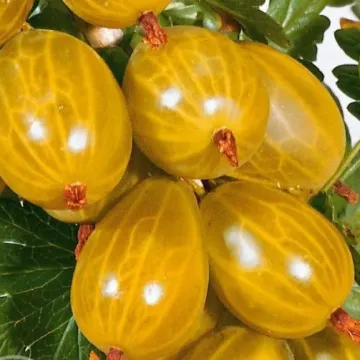
Gooseberry (Ribes uva-crispa L.) is a perennial berry-bearing shrub belonging to the Grossulariaceae family. Renowned for its unique flavor profile, the fruit is widely consumed globally and is highly valued in horticulture for its rich content of vitamins, antioxidants, and dietary fibers.
Originating from Europe and Western Asia, the gooseberry has been cultivated for centuries across diverse climatic regions. The plant is notably hardy, capable of withstanding colder temperatures, which makes it a preferred choice for temperate agriculture throughout North America, Europe, and parts of Asia.
Botanically, the plant is characterized by its deciduous, thorny stems and serrated leaves. The fruits are typically spherical or ellipsoidal, with skin ranging from smooth to hairy, and colors spanning from translucent green to deep purple or red. The root system is relatively shallow, requiring careful management during cultivation.
Successful production relies on well-draining, nutrient-rich soils with a slightly acidic to neutral pH. Agronomic practices include annual pruning to maintain air circulation and sun exposure, which is critical for reducing humidity levels around the foliage and preventing fungal outbreaks. Regular irrigation during fruit expansion is essential for optimal yields.
Economic importance stems from both fresh consumption and processing, as the berries are perfect for jams, tarts, and preserves. While highly productive, growers must monitor for common issues such as powdery mildew, leaf spot, and aphid infestations. Integrated pest management strategies are generally recommended to ensure the long-term health of the plantation.
Контент-граф
Connections · Gooseberry
Most often together:
Marketplace
Products · 80


Microthiol Special
Cerexagri, Marseille, Франція.
Insecticides, Acaricides
0
0
·
50
7 offers
2.6 €за 1 л
Купить


Cumulus DF granules
БАСФ СЕ, м.Людвігсхафен Німеччина
Fungicides
0
0
·
42
7 offers
0.2 €за 1 л
Купить


COMPLEX ORGANIC-MINERAL FERTILIZER «COMPLEX+»
LISICHANSKY JELATINOVOY ZAVOD, TDB
Fertilizers
0
0
·
24
4 offers
1 €за 1 кг
Купить

Insectoacaricide Preparation 30 B
Agroprymnika, LLC
Insecticides, Acaricides
0
0
·
24
2 offers
3 €за 1 л
Купить