


SKU #4347
·
279 views
Acur
Currant
User rating
0 votes0% positive reviews
No ratings yet — be the first.
Type of Sort
Blackcurrant
About product
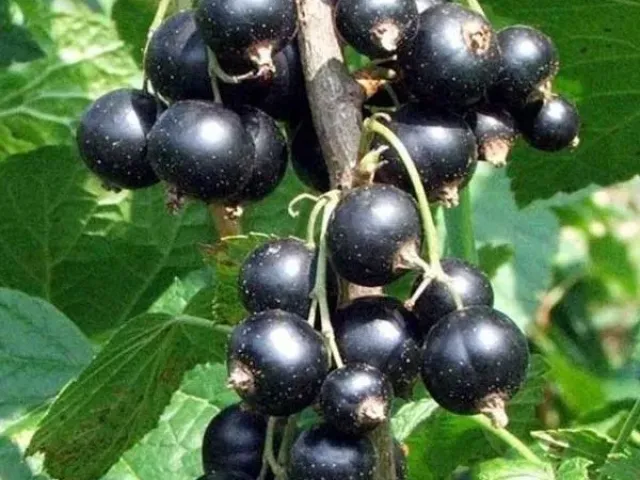
Early-maturing variety, developed at the Far Eastern Research Institute of Horticulture from crossing the varieties Neapolitan and Daughter of Amguni. Author: A.S. Vavilov. Included in the State Register of Varieties approved for use in the Far Eastern region in 1996.
Medium-height, slightly spreading, medium-density bush. Woody stems of medium thickness, unbranched, light brown. Buds of mediu…
Type of Sort
Blackcurrant
Description
Early-maturing variety, developed at the Far Eastern Research Institute of Horticulture from crossing the varieties Neapolitan and Daughter of Amguni. Author: A.S. Vavilov. Included in the State Register of Varieties approved for use in the Far Eastern region in 1996.
Medium-height, slightly spreading, medium-density bush. Woody stems of medium thickness, unbranched, light brown. Buds of medium size, conical, deviated from the stem, leaf scar shape broad, crescent-shaped.
Five-lobed leaf, large, light green, slightly shiny, leathery, wrinkled. Blade slightly raised at the top, concave along the central veins, especially from the base to the tip of the leaf, margin not wavy. Lobes wide, pointed, widely spaced, central lobe significantly exceeds lateral ones, angle between central veins of lateral lobes acute. Basal lobes poorly developed. Leaf base heart-shaped, with deep notch. Teeth large, wide, pointed. Petiole of medium length and thickness.
Flowers of medium size, dish-shaped, slightly pink, sepals light green, not closed, slightly bent. Inflorescences very long (up to 13 cm), medium density, hanging. Inflorescence axis of medium thickness, light green, with long, hairy petiole.
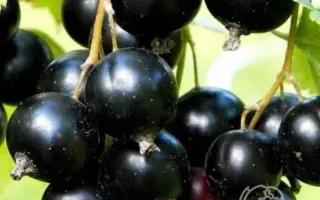
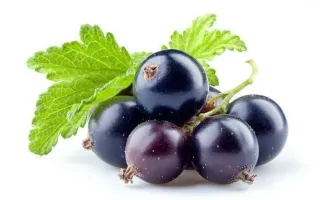
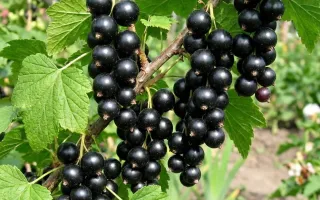
Berries large (1.1 g), one-dimensional, spherical or slightly oval, bluish-black, with waxy coating, with average number of seeds. Receptacle small, closed, pedicels of medium length.
Sweet-sour flavor (3.5 points). Berries for technical purposes. Chemical composition: soluble dry matter — 13.5%, ascorbic acid — 156.8 mg/100 g, catechins — 45.0 mg/100 g.
Cold-resistant, self-fertile, resistant to fungal diseases, bud and spider mites, average yield 8.8 t/ha (3.3 kg/plant).
Advantages of the variety: relatively resistant to major diseases and pests, highly winter-hardy, high-yielding.
Disadvantages of the variety: mediocre berry flavor.
Crop & resistance
Crop
Pest resistance
Specifications
| Type of Sort | |
|---|---|
| Catalog | Catalog → Currant |
Store offers
Prices are updated on loadLoading offers…
Aggregator catalog: prices are collected automatically from store websites, normalized by AI and converted at the current exchange rate. Before ordering, confirm the price and availability on the store's website. This block is not indexed by search engines — the data is loaded after the page opens.
Alternatives
Currants · similar varieties



See also
Often considered together with this variety







Recently viewed
Similar items in this catalog section




Comments · 0