


SKU #4353
·
185 views
Amur Preserved
Currant
User rating
0 votes0% positive reviews
No ratings yet — be the first.
Type of Sort
Blackcurrant
About product

Medium-late ripening variety, obtained at Blagoveshchen Agricultural Institute from open pollination of the 'Sladkoplodnaya' variety. Breeders: F.I. Glinshchikov and P.I. Menshikov. Registered in the State Register of Selection Achievements for the Far East region since 2004.
Medium-height, slightly spreading bush with medium density. Growing shoots are medium thickness, straight, light green…
Type of Sort
Blackcurrant
Description
Medium-late ripening variety, obtained at Blagoveshchen Agricultural Institute from open pollination of the 'Sladkoplodnaya' variety. Breeders: F.I. Glinshchikov and P.I. Menshikov. Registered in the State Register of Selection Achievements for the Far East region since 2004.
Medium-height, slightly spreading bush with medium density. Growing shoots are medium thickness, straight, light green with moderate anthocyanin coloration, matte, slightly hairy. Woody shoots are medium thickness, grayish-light brown, with brownish-gray tips, without hairs. Buds are solitary on shoots, slightly pinkish, without hairs, deviated from the shoot. Terminal bud is free, medium-sized, elongated, with a pointed tip of light-brown color. Leaf scar is rounded-triangular.
Leaves are light green with yellowish tinge, relatively small, weakly shiny, horizontally positioned. Leaf blade is slightly hairy, with slightly wrinkled surface, herbaceous, slightly concave along the vein. Teeth are medium, blunt, short, not curled, with noticeable 'tips'. Number of lobes is three, with medium-depth indentations. Central lobe is wide, with pointed tip, exceeding lateral lobes. Lateral lobes are medium length and width, ovate, blunt-pointed, with leaf tips directed toward the leaf apex. Angle between veins of lateral lobes is obtuse. Basal lobes are undeveloped. Leaf base is heart-shaped, with a deep and wide open notch. Petiole is relatively long, medium thickness, without hairs, positioned nearly at a right angle to the shoot. Anthocyanin coloration is strong along the entire petiole length.
Flower of medium size, pale-colored, greenish-white, with very faint pinkish tips. Sepals are slightly curled, not fused, pale pink. Inflorescence is medium length (5.5 cm) and density. Inflorescence axis is medium, straight, hairy, with short petiole.
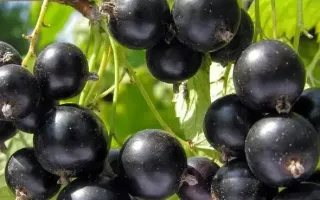
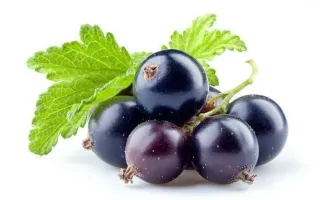
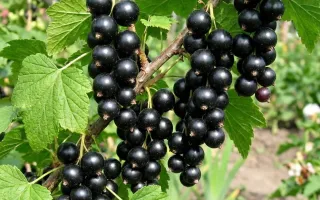
Berries are medium-sized (0.8 g), round, nearly black, sweet-sour (3.0 points), aromatic, with firm flesh, dry detachment, closed, medium-sized calyx, round, non-detaching. Peduncle is short. Seeds are medium quantity, small. Chemical composition: total sugars — 5.4%, titratable acidity — 4.2%, ascorbic acid — 346.0 mg/100 g.
Winter-hardy and drought-resistant, yield 8-10 t/ha. Slightly affected by powdery mildew and bud mite.
Advantages of the variety: high winter hardiness, stable yield, resistance to most dangerous pests and diseases, relatively high self-fertility, ability to fruit on one-year growths.
Disadvantages of the variety: low fruit flavor quality, suitable only for processing, medium berry size, uneven ripening.
Crop & resistance
Crop
Disease resistance
Pest resistance
Specifications
| Type of Sort | |
|---|---|
| Catalog | Catalog → Currant |
Store offers
Prices are updated on loadLoading offers…
Aggregator catalog: prices are collected automatically from store websites, normalized by AI and converted at the current exchange rate. Before ordering, confirm the price and availability on the store's website. This block is not indexed by search engines — the data is loaded after the page opens.
Alternatives
Currants · similar varieties


See also
Often considered together with this variety







Recently viewed
Similar items in this catalog section




Comments · 0