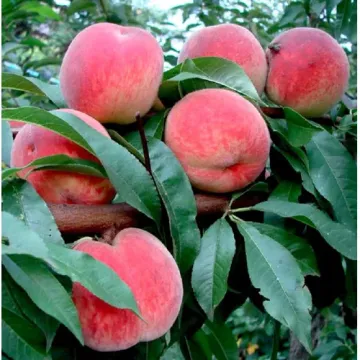
Description
The peach (Prunus persica (L.) Batsch) is a highly valued fruit-bearing tree belonging to the family Rosaceae. Known for its succulent and aromatic fruits, it is a key agricultural commodity grown globally in temperate and subtropical climates for both fresh consumption and processing.
Originating from Northwest China, the peach has been cultivated for thousands of years. Its distribution expanded along the Silk Road to Persia, eventually reaching Europe and the Americas. Today, it requires regions with sufficient sunlight and moderate winters, although breeding programs have introduced cold-hardy varieties to broaden its range.
Botanically, the peach is a deciduous tree with a fast growth rate and a tendency to produce vigorous shoots. The tree displays beautiful pink blossoms in early spring before the foliage appears. Its fruit is a drupe with a fuzzy or smooth exocarp, depending on the variety, surrounding a hard woody pit that houses the seed.
Successful peach orchard management requires well-drained, fertile soil, ideally sandy loam with a slightly acidic to neutral pH. Proper irrigation is crucial during fruit development to ensure fruit size and sugar accumulation. Regular pruning is essential to maintain tree architecture, increase airflow within the canopy, and promote consistent annual yields.
The crop is susceptible to various pests, including the greenhouse whitefly, loopers (geometrid moths), gall midges, and the European corn borer. Integrated Pest Management (IPM) strategies are vital for controlling these threats, as well as protecting the trees from common fungal diseases like leaf curl and powdery mildew to ensure long-term productivity.
- Key pests: greenhouse whitefly, loopers, gall midges, corn borers.
- Management: rigorous pruning, balanced fertilization, and pest monitoring.
Content graph
Crop pests · 27
Alfalfa seed chalcidAlfalfa weevilAphidBeet webwormCereal leaf beetleCotton bollwormCrucifer flea beetlesDiamondback mothEuropean cherry fruit flyEuropean corn borerFrit flies and cereal fliesGall midgesGeometer mothsGrape phylloxeraGreenhouse whiteflyHop flea beetleLarge whiteLeafhoppersOriental fruit mothPea aphidPollen beetlePollen beetlePyralid mothsSunn pestTurnip mothTwo-spotted spider miteWheat beetle
Контент-граф
Connections · Peach
Most often together:
Breeders
1 связь
Marketplace
Products · 182
All 182
Fungicides 98
Insecticides, Acaricides 38
Peach 18
Herbicides, Desiccants 10
Fertilizers 9
Plant Growth Regulator 6
Biological Products 3








Sanmait
Nissan Chemical Corporation, LLC
Insecticides, Acaricides
0
0
·
3K
23 offers
55.7 €за 1 л
Купить




Caesar
Mactheshim Chemical Works Ltd.
Insecticides, Acaricides
0
0
·
2.2K
8 offers
21.4 €за 1 л
Купить

Sumithion
Sumitomo Chemical Agro Europe S.A.S.
Insecticides, Acaricides
2
0
·
2.2K
7 offers
13.3 €за 1 л
Купить


Pirinex 48
Mactheshim Chemical Works Ltd.
Insecticides, Acaricides
0
0
·
1.7K
8 offers
2.5 €за 1 л
Купить


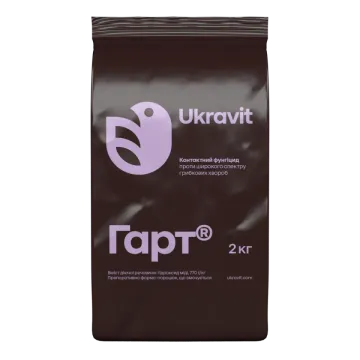
Gart
ТОВ «Фабрика агрохімікатів», Черкаси, Україна
Fungicides
0
0
·
1.5K
8 offers
13.5 €за 1 л
Купить


Total
Санрайз Кемікалз Ко. Лтд., Шанхай, Китай
Herbicides, Desiccants
0
0
·
1.5K
23 offers
3.5 €за 1 л
Купить



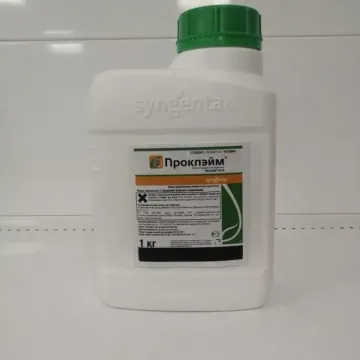


Pirinex 25
F. Macteshim Chemical Works, LLC
Insecticides, Acaricides
0
0
·
934
11 offers
11.7 €за 1 л
Купить


Patrol
Спейс-Уранія Кемікал ГмбХ, Гамбург, Німеччина
Fungicides
0
0
·
899
3 offers
5.9 €за 1 л
Купить