

SKU #37641
·
18 views
Bosfor
Wheat
User rating
0 votes0% positive reviews
No ratings yet — be the first.
Type of Development
Winter wheat
Wheat Type
Soft wheat variety
Growing Season
260-270 days
Plant; height
80-90 cm
About product

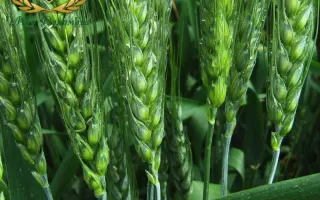
An intensive wheat variety with a strong immune system, excellent lodging resistance, and a yield potential of up to 8 tons.
Type of Development
Winter wheat
Wheat Type
Soft wheat variety
Growing Season
260-270 days
Plant; height
80-90 cm
Description
Focus on Stability: Why Bosfor is the Choice for Intensive Farming
Developed by the Plant Breeding and Genetics Institute, this variety addresses the primary challenge for agricultural producers: achieving predictable yields amidst volatile climate conditions. Bosfor soft winter wheat is not a ‘high-risk’ variety that yields a one-time record only to fail under drought or disease stress. Instead, it is a tool for those prioritizing consistent profitability.
Key Advantages: Agronomic Protection and Architecture
The main competitive edge of this variety is the synergy between high productivity and a robust biological defense system. In intensive farming, where the risk of fungal diseases is significantly elevated, Bosfor demonstrates superior resilience:
- Comprehensive protection against leaf infections: the variety is highly resistant to aggressive strains of brown and yellow rust.
- Biological resistance to septoria and fusarium head blight: a critical factor for maintaining grain quality in humid seasons.
- Low susceptibility to powdery mildew: the variety maintains its health even in dense planting conditions.
The plant height (80–90 cm) ensures excellent resistance to lodging. Even when applying high rates of nitrogen fertilizers, to which the variety responds positively, the stalk remains upright until harvest. This minimizes mechanical harvest losses and improves combine efficiency.
Economic Profile
With a vegetation period of 260–270 days, Bosfor is remarkably predictable. A winter hardiness score of 8/9 ensures safe passage through the winter months and vigorous regrowth in early spring. A thousand-kernel weight of 45–50g meets the highest standards for commercial grain quality. Under optimal agronomic management, the yield potential ranges from 6 to 8 tons per hectare, making it ideal for professional farms with high cultivation standards.
Final Verdict
Is there a downside? Like most intensive varieties, Bosfor requires precise nutritional management and proper crop rotation. It does not tolerate neglect, as its genetic potential is optimized to convert mineral fertilizers into a heavy, well-filled spike. If you are looking for a reliable solution to produce a consistent 7-ton yield with high disease resistance, this is your go-to variety.
Crop & resistance
Disease resistance
Specifications hover over for a hint about the specification
| Type of Development | |
|---|---|
|
Wheat Type
Wheat Type
Biologically hard wheat differs from soft wheat in its greater demand for soil fertility and agronomic conditions (especially regarding field cleanliness from weeds), lower drought resistance and plasticity, relatively weaker root development, especially nodal roots, and lower ti... |
|
| Growing Season | 260-270 days |
| Plant; height | 80-90 cm |
| Seed: mass 1.000 pcs seeds | 45-50 grams |
| Winter Hardiness, Ratings (9-1) | 8 |
| Resistance to lodging | |
| Potential Yield | 6-7 tons, 7-8 tons |
| Catalog | Catalog → Wheat |
| Originator | PBGI-NCSCI |
| Country | Ukraine |
Store offers · 5 from 5 stores
Prices are updated on loadLoading offers…
Aggregator catalog: prices are collected automatically from store websites, normalized by AI and converted at the current exchange rate. Before ordering, confirm the price and availability on the store's website. This block is not indexed by search engines — the data is loaded after the page opens.
See also
Often considered together with this variety



Recently viewed
Similar items in this catalog section


Comments · 0