
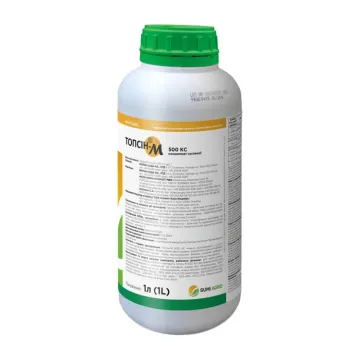
Description
Eyespot is a fungal disease of cereals caused by the pathogen Oculimacula yallundae (and Oculimacula acuformis). It is a significant soil-borne infection that primarily affects the base of the stems of winter wheat, barley, and rye, leading to lodging and impaired nutrient transport within the plant.
The disease is common in regions with cool, wet autumns and springs. The fungus survives in crop residues and infects young seedlings during the winter months. As the growing season progresses, the infection spreads upward from the base, weakening the stem structure and reducing the plant's ability to fill the grain.
The primary symptom is the appearance of distinct lesions on the leaf sheaths and lower internodes. These spots are oval-shaped with a dark border and often contain a light-colored center, giving them the characteristic "eyespot" appearance. Severe infections result in the stem wall collapsing, causing lodging and the formation of white, unfilled heads known as whiteheads.
The development of the disease is heavily influenced by environmental conditions. High soil moisture, high humidity, and moderate temperatures ranging between 5°C and 15°C provide ideal conditions for fungal growth. Early-sown crops, dense planting, and high-nitrogen fertilizers are known to increase the severity of an outbreak.
Management of eyespot focuses on cultural and chemical practices to prevent yield losses. Crop rotation is the most effective strategy, involving a gap of at least two years between susceptible cereal crops. Additionally, selecting resistant varieties and using fungicides at the growth stage of tillering are critical for control. Proper field sanitation, such as burying infected crop residues, further helps to reduce the primary inoculum load.
Контент-граф
Connections · Eyespot
Most often together:
Marketplace
Products · 135

Kolosal Pro
ЗАТ Фірма Август, Росія.,селище Вурнари,
Fungicides
1
1
·
5.2K
13 offers
0.2 €за 1 л
Купить





Fundazim
ТОВ «Фабрика агрохімікатів», Черкаси, Україна
Fungicides
0
0
·
1.8K
9 offers
14.6 €за 1 л
Купить


Bumper Super 490
F. Macteshim Chemical Works, LLC
Fungicides
0
0
·
1.5K
7 offers
15.4 €за 1 л
Купить

Forsaj 500 SC
China Chemical Industrial & Rice Co. Ltd
Fungicides
0
0
·
1.5K
6 offers
1.6 €за 1 л
Купить


Vitadel
Три Дельта Компані Інтернешнл, Гонконг, Китай.
Fungicides
0
0
·
533
9 offers
3.3 €за 1 л
Купить





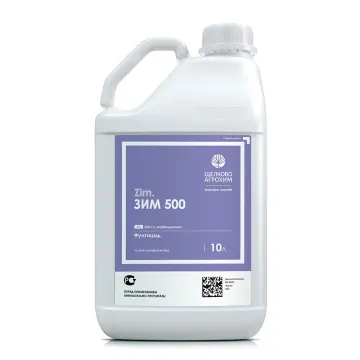
Carbendazim 500 (Carbendazim 500)
GLOBAL CHEMICAL GROUP, LLC
Fungicides
0
0
·
54
5 offers
2.6 €за 1 л
Купить



KEVLAR
«Нанджин Ессенс Файн-Кемікал Ко. Лтд» (Китай)
Fungicides
0
0
·
52
4 offers
6.2 €за 1 л
Купить


Amfora
ТОВ «Фабрика агрохімікатів», Черкаси, Україна
Fungicides
0
0
·
51
2 offers
10.3 €за 1 л
Купить


Znakhar k.s.
Ф.Нанджин Уссенс Файн-Кемікал Ко. Лтд. ,м.Черкаси. Україна.
Fungicides
0
0
·
47
5 offers
14.3 €за 1 л
Купить

Alpha-Epoxil
«Юнісіті Ентерпрайсіс Л.П.», Единбург, Великобританія
Fungicides
0
0
·
47
2 offers
3.2 €за 1 л
Купить

Compact Plus 25 c.u.
ДВА Кемікалс Ко. Лтд., Китай (DVAChemicalsCo.Ltd.),China;
Fungicides
0
0
·
47
2 offers
4.5 €за 1 л
Купить

Phoenix-Profi
F. YUNISITY ENTERPRISES LTD., United Kingdom
Fungicides
0
0
·
47
1 offer
1 €за 1 л
Купить


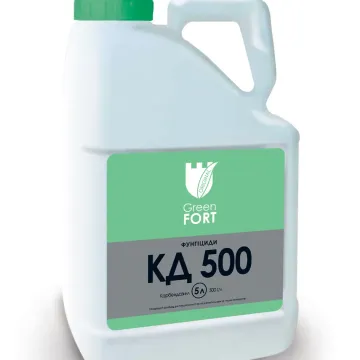
Grinfort CD 500 hp.
«Нанджин Ессенс Файн-Кемікал Ко. Лтд» (Китай)
Fungicides
0
0
·
45
1 offer
6.3 €за 1 л
Купить

Community
Discussion
No discussions yet — be the first.