
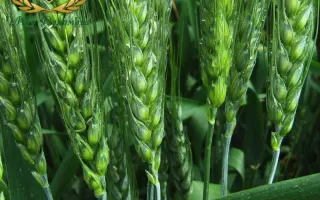


SKU #37036
·
27 views
Niva Kyivshchyny
Wheat
User rating
0 votes0% positive reviews
No ratings yet — be the first.
Type of Development
Winter wheat
Wheat Type
Soft wheat variety
Plant; height
80-90 cm
Resistance to lodging
Very good
About product

The winter wheat variety Niva Kyivshchyny is an intensive type of soft wheat with a short stem, exhibiting high resistance to lodging and shattering. This variety is distinguished by enhanced winter hardiness and high drought tolerance, making it a reliable choice for various climatic conditions. Niva Kyivshchyny belongs to the erythrospermum variety and is characterized by strong plant mass, whic…
Type of Development
Winter wheat
Wheat Type
Soft wheat variety
Plant; height
80-90 cm
Resistance to lodging
Very good
Description
The winter wheat variety Niva Kyivshchyny is an intensive type of soft wheat with a short stem, exhibiting high resistance to lodging and shattering. This variety is distinguished by enhanced winter hardiness and high drought tolerance, making it a reliable choice for various climatic conditions. Niva Kyivshchyny belongs to the erythrospermum variety and is characterized by strong plant mass, which contributes to stable yields.
The variety is recommended for cultivation in the Polissia, forest-steppe, and steppe zones, where it demonstrates high productivity. Average yields from state trials amounted to 68.0 c/ha in the steppe zone, 70.3 c/ha in the forest-steppe, and 54.5 c/ha in the Polissia zone. High protein content in the grain (14.0–14.6%) makes this variety attractive for producing high-quality flour and other products. Plant height reaches 80–81 cm, which promotes good ear development and yield formation.
The seeding rate is 5.0–6.0 million viable seeds per hectare, ensuring optimal plant density. The variety shows resistance to numerous diseases and stress factors, as well as versatility in use across different agro-fonuses. It is not demanding regarding predecessors and responds well to nitrogen fertilization, enabling adaptation of cultivation technologies to specific conditions and increasing yield.
The variety is recommended for cultivation in the Polissia, forest-steppe, and steppe zones, where it demonstrates high productivity. Average yields from state trials amounted to 68.0 c/ha in the steppe zone, 70.3 c/ha in the forest-steppe, and 54.5 c/ha in the Polissia zone. High protein content in the grain (14.0–14.6%) makes this variety attractive for producing high-quality flour and other products. Plant height reaches 80–81 cm, which promotes good ear development and yield formation.
The seeding rate is 5.0–6.0 million viable seeds per hectare, ensuring optimal plant density. The variety shows resistance to numerous diseases and stress factors, as well as versatility in use across different agro-fonuses. It is not demanding regarding predecessors and responds well to nitrogen fertilization, enabling adaptation of cultivation technologies to specific conditions and increasing yield.
Crop & resistance
Disease resistance
Specifications hover over for a hint about the specification
| Type of Development | |
|---|---|
|
Wheat Type
Wheat Type
Biologically hard wheat differs from soft wheat in its greater demand for soil fertility and agronomic conditions (especially regarding field cleanliness from weeds), lower drought resistance and plasticity, relatively weaker root development, especially nodal roots, and lower ti... |
|
| Plant; height | 80-90 cm |
| Resistance to lodging | |
| Potential Yield | 6-7 tons |
| Catalog | Catalog → Wheat |
| Originator | IPPG NASU |
| Country | Ukraine |
Store offers · 1 from 1 stores
Prices are updated on loadLoading offers…
Aggregator catalog: prices are collected automatically from store websites, normalized by AI and converted at the current exchange rate. Before ordering, confirm the price and availability on the store's website. This block is not indexed by search engines — the data is loaded after the page opens.
See also
Often considered together with this variety



Recently viewed
Similar items in this catalog section


Comments · 0