


SKU #37191
·
49 views
Slavna
Wheat
User rating
0 votes0% positive reviews
No ratings yet — be the first.
Type of Development
Winter wheat
Wheat Type
Soft wheat variety
Ostistost'
Ostistaya
Growing Season
260-270 days
About product

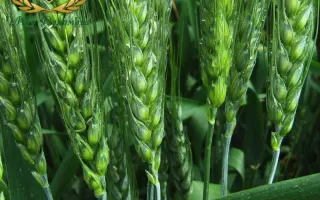
The winter soft wheat variety Slavna is a medium-early type with a vegetation period ranging from 269 to 287 days. It belongs to the erythrospermum (spikelet) variety and is distinguished by high genetic productivity potential, enabling record yields on high agrofond. Slavna is drought-tolerant, resistant to lodging and shattering, possesses high winter hardiness and moderate resistance to disease…
Type of Development
Winter wheat
Wheat Type
Soft wheat variety
Ostistost'
Ostistaya
Growing Season
260-270 days
Description
The winter soft wheat variety Slavna is a medium-early type with a vegetation period ranging from 269 to 287 days. It belongs to the erythrospermum (spikelet) variety and is distinguished by high genetic productivity potential, enabling record yields on high agrofond. Slavna is drought-tolerant, resistant to lodging and shattering, possesses high winter hardiness and moderate resistance to diseases. The yield of this variety ranges from 69 to 102.4 c/ha, and the grain quality is rated as strong, making it in demand in various agroclimatic zones, including Steppe, Forest-Steppe, and Polissia.
For successful cultivation of Slavna, proper pre-sowing soil preparation is crucial, ensuring a compact seedbed layer with bulk density of 1.1–1.3 g/cm³ and predominance of soil particles with diameter 1–3 mm. Sowing is recommended in late September to early October, targeting average daily air temperature of 14–17°C, to allow plants to maximize winter-spring precipitation and avoid water deficit during grain filling. Seeds are sown at a depth of 3–7 cm with row spacing of 15 cm, with a seeding rate of 4.5–5 million viable seeds per hectare (approximately 200–220 kg). The vegetative period requires mandatory monitoring of pests, diseases, and weeds, as well as application of plant protection products and herbicides to maintain the phytosanitary condition of crops.
To ensure high yield and grain quality, regular application of nutrients is necessary, starting from autumn sowing and continuing in early spring and during grain filling. This approach promotes soil mineralization and optimal plant development. The freshly milled grain of Slavna variety has a longer dormancy period compared to other varieties, which positively affects its storage and subsequent utilization. Harvesting is conducted at full grain maturity with moisture content of 14–17%, ensuring product preservation and high quality.
For successful cultivation of Slavna, proper pre-sowing soil preparation is crucial, ensuring a compact seedbed layer with bulk density of 1.1–1.3 g/cm³ and predominance of soil particles with diameter 1–3 mm. Sowing is recommended in late September to early October, targeting average daily air temperature of 14–17°C, to allow plants to maximize winter-spring precipitation and avoid water deficit during grain filling. Seeds are sown at a depth of 3–7 cm with row spacing of 15 cm, with a seeding rate of 4.5–5 million viable seeds per hectare (approximately 200–220 kg). The vegetative period requires mandatory monitoring of pests, diseases, and weeds, as well as application of plant protection products and herbicides to maintain the phytosanitary condition of crops.
To ensure high yield and grain quality, regular application of nutrients is necessary, starting from autumn sowing and continuing in early spring and during grain filling. This approach promotes soil mineralization and optimal plant development. The freshly milled grain of Slavna variety has a longer dormancy period compared to other varieties, which positively affects its storage and subsequent utilization. Harvesting is conducted at full grain maturity with moisture content of 14–17%, ensuring product preservation and high quality.
Crop & resistance
Disease resistance
Specifications hover over for a hint about the specification
| Type of Development | |
|---|---|
|
Wheat Type
Wheat Type
Biologically hard wheat differs from soft wheat in its greater demand for soil fertility and agronomic conditions (especially regarding field cleanliness from weeds), lower drought resistance and plasticity, relatively weaker root development, especially nodal roots, and lower ti... |
|
| Ostistost' | |
| Growing Season | 260-270 days |
| Potential Yield | 6-7 tons, 7-8 tons, 8-9 tons, 9-10 tons |
| Number of productive stems per hectare | 4.5-5.0 million pcs |
| Catalog | Catalog → Wheat |
| Originator | IPPG NASU |
| Country | Ukraine |
Store offers · 5 from 4 stores
Prices are updated on loadLoading offers…
Aggregator catalog: prices are collected automatically from store websites, normalized by AI and converted at the current exchange rate. Before ordering, confirm the price and availability on the store's website. This block is not indexed by search engines — the data is loaded after the page opens.
See also
Often considered together with this variety



Recently viewed
Similar items in this catalog section


Comments · 0