

Pest · Thrips · affects Winter wheat, Winter rapeseed, Fodder beet
Especially harmful
Wheat thrips
Haplothrips tritici
Description
The wheat thrips (Haplothrips tritici) is a member of the order Thysanoptera, family Phlaeothripidae. It is a significant pest of cereal crops, particularly affecting wheat and barley, causing major economic losses in agricultural regions by feeding on the sap of developing reproductive plant parts.
While this insect primarily targets winter wheat and winter barley, it can also be found on a variety of other crops. Observations indicate its presence on peas, winter rapeseed, cabbage, potatoes, fodder beet, and even apple trees, usually as a consequence of migration during extreme drought or after the harvest of primary cereals.
The life cycle of the wheat thrips is univoltine, meaning one generation per year. Adults hibernate in the soil at depths of 10-15 cm or within crop stubble. In spring, as temperatures rise, they emerge and migrate to wheat fields to feed on the flag leaf and eventually the developing spikelets.
The damage caused by this pest is characterized by stunted growth and grain deformation. Thrips feed by piercing the plant tissues and sucking out the sap, which results in "white heads," grain shriveling, and significant yield reductions. Heavy infestations can lead to a drastic decrease in both the protein content and the weight of the harvested grain.
Integrated Pest Management (IPM) is essential for effective control of wheat thrips. Recommended practices include:
- deep plowing of fields after harvest to bury the overwintering adults;
- implementation of a crop rotation schedule to break the pest cycle;
- early sowing of resistant cereal varieties;
- targeted application of insecticides when the population exceeds the economic damage threshold during the ear emergence phase.
Biology
Taxonomy
- Latin name
- Haplothrips tritici
- Order
- Thrips
- Family
- Phlaeothripidae
Taxonomy and Latin: EPPO Global Database · code HAPLTR
Content graph
Damages crops · 9
Контент-граф
Connections · Wheat thrips
Most often together:
Marketplace
Products · 31

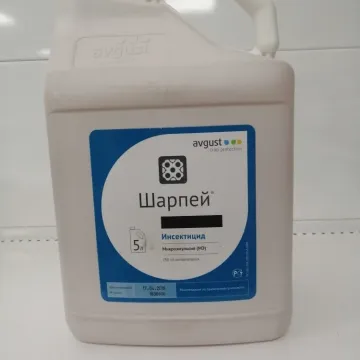
Sharpei
ЗАТ Фірма Август, Росія.,селище Вурнари,
Insecticides, Acaricides
0
0
·
2.5K
14 offers
2.3 €за 1 л
Купить


Alpha-Super
Agricopeer Asia Limited
Insecticides, Acaricides
0
0
·
2.1K
12 offers
7.7 €за 1 л
Купить

Lord
China Chemical Industrial & Rice Co. Ltd
Insecticides, Acaricides
1
1
·
1.5K
3 offers
30.2 €за 1 л
Купить

Bisha
Yangzhou Pioneer Chemical Co., Ltd.
Insecticides, Acaricides
0
0
·
1.1K
6 offers
0.7 €за 1 л
Купить

Alphagard 100
Garda Chemicals Ltd., F.
Insecticides, Acaricides
0
0
·
1.1K
8 offers
3.7 €за 1 л
Купить

Fox
Ф.Суперус Ко ., Лтд., Гонг-Конг, Шанхай, Китай.
Insecticides, Acaricides
0
0
·
1.1K
1 offer
5.8 €за 1 л
Купить
Tesak
«Ваишелі Фармацеутикалс», Нью-Делі, Індія.
Insecticides, Acaricides
0
0
·
751
3 offers
2.6 €за 1 л
Купить

Raut
Три Дельта Компані Інтернешнл, Гонконг, Китай.
Insecticides, Acaricides
0
0
·
735
2 offers
4.9 €за 1 л
Купить

Kordon
Три Дельта Компані Інтернешнл, Гонконг, Китай.
Insecticides, Acaricides
0
0
·
654
2 offers
6.6 €за 1 л
Купить

Borey, KS
ZAT «August-Bel», Republic of Belarus
Insecticides, Acaricides
0
0
·
155
1 offer
41.6 €за 1 л
Купить

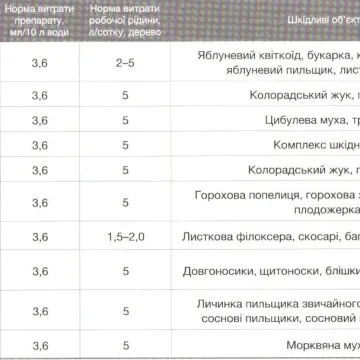


Borey Neo
ZAT «August-Bel», Republic of Belarus
Insecticides, Acaricides
0
0
·
44
3 offers
17.6 €за 1 л
Купить

Insecticide preparation «ZETAVIT – agro», 10%, a.e., (zeta-cypermethrin
«Нанджин Ессенс Файн-Кемікал Ко. Лтд» (Китай)
Insecticides, Acaricides
0
0
·
41
4 offers
24.3 €за 1 л
Купить


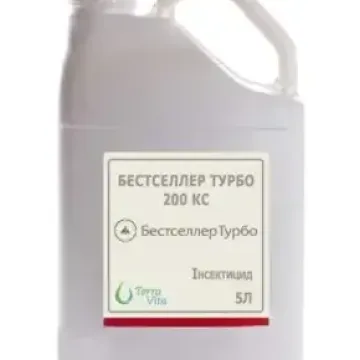
Bestseller Turbo 200
Агріфар С.А.(Бельгія
Insecticides, Acaricides
0
0
·
25
6 offers
4.8 €за 1 л
Купить


Bestseller Turbo 200
Агріфар С.А.(Бельгія
Insecticides, Acaricides
0
0
·
19
8 offers
18.2 €за 1 л
Купить


Community
Discussion
No discussions yet — be the first.