

Description
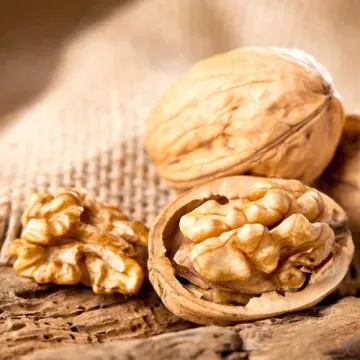
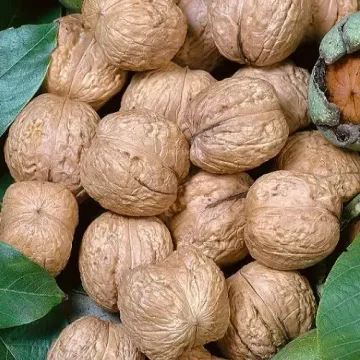
The Persian walnut (Juglans regia L.) is a high-value nut crop belonging to the Juglandaceae family. As a long-lived deciduous tree, it is prized not only for its nutrient-dense kernels, rich in healthy fats and proteins, but also for its high-quality hardwood. It is a cornerstone crop in many regions, providing significant economic output through consistent annual harvests.
Originating from the mountainous regions of Central Asia, the Persian walnut has adapted to various temperate climates globally. To achieve peak productivity, the tree requires sites with deep, well-draining, and nutrient-rich soils. Exposure to full sunlight is critical for proper development, and protective measures against harsh late spring frosts are essential to prevent damage to the flower buds.
Botanically, the plant is characterized by a strong, deep root system and a wide, spreading canopy. Successful fruit set relies heavily on pollination; therefore, orchard design must consider the flowering sequence of different cultivars. The growth cycle is relatively slow in the first years, requiring diligent care to establish a sturdy frame structure for the future canopy.
Effective orchard management involves balanced fertilization, systematic pruning to remove dead or diseased branches, and irrigation strategies that prevent water stress during the critical fruit-filling stage. Growers must monitor orchard health constantly to ensure that vegetative growth is robust and the trees are prepared for the winter dormancy period.
The health of the orchard can be significantly impacted by several prevalent diseases and pests:
- Alternaria leaf spot and anthracnose
- Fusarium and Ascochyta blight
- Phytophthora root rot
- Crown gall (root cancer)
- Nematode infestations
Content graph
Crop diseases · 17
Контент-граф
Connections · Persian walnut
Most often together:
Marketplace
Products · 26







Innoparmis Agrosains / Nano Chelate Fertilizer Enriched Iron 10%
FanAvar Sepehr Parmis, Іран.
Fertilizers
0
0
·
42
No offers
—
Details