


SKU #4648
·
565 views
Marmalade Tree
Currant
User rating
0 votes0% positive reviews
No ratings yet — be the first.
Type of Sort
Red Blackcurrant
Prices in stores
from963.1 €per 1000 pcs
10 offers from 9 stores
About product

A very late-ripening variety, developed at the All-Russian Research Institute of Fruit Crop Selection from a cross between Rote Schpitzlese and Maarses Prominent. Author: L.V. Bayanova. Under state variety trials since 1996. Medium-height, semi-spreading, dense bush. Stems are thick, weakly hairy, with a slight pink 'tan'. Buds are large, tapering to the tip, sit on wide petioles, and are angled…
Type of Sort
Red Blackcurrant
Description
A very late-ripening variety, developed at the All-Russian Research Institute of Fruit Crop Selection from a cross between Rote Schpitzlese and Maarses Prominent. Author: L.V. Bayanova. Under state variety trials since 1996.
Medium-height, semi-spreading, dense bush. Stems are thick, weakly hairy, with a slight pink 'tan'. Buds are large, tapering to the tip, sit on wide petioles, and are angled from the stem. Petiole scar is broad.
Leaf is five-lobed, medium-sized, dark green, shiny, leathery, heavily hairy underneath. Blade is wrinkled, flat or folded along main veins, positioned horizontally. Leaf margin is wavy, curled upward. Central lobe predominates over lateral ones, lobes are pointed. Angle between main veins of lateral lobes is acute or nearly right. Basal lobes are poorly developed. Leaf base has a small, broad notch or is straight. Teeth are small and sharp. Petiole is long, thick, green or with slight anthocyanin 'tan'.
Flowers are deep saucer-shaped, with weakly expressed calyx, green. Stamens and pistil are low. Inflorescence base is green, sometimes reddens in older flowers. Sepals are green, not fused, twisted. Petals are large, broad. Inflorescences are medium length (8.0–10.0 cm), dense, arched. Axes are thick, green, heavily hairy. Petiole of inflorescences is medium length, thick. Flower stalks are long, slightly curved.
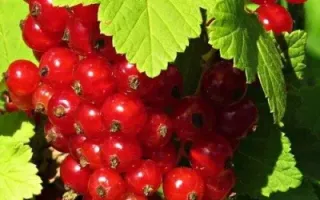
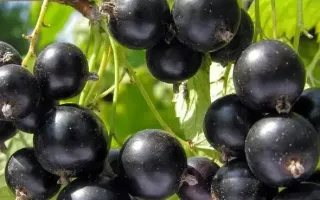
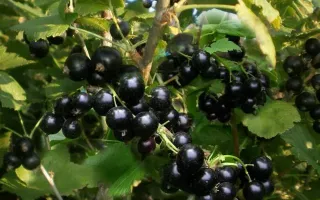
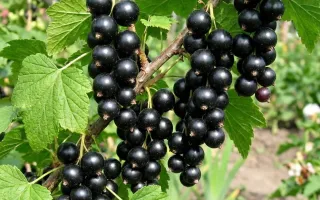
Berries are medium to large (0.6–0.8 g), orange-red, flat-round, with clearly visible white veins, dry detachment, slightly sour taste, high gelling properties. Receptacle is five-sided, small. Chemical composition: dry matter — 11.3%, total sugars — 7.0%, titratable acidity — 2.2%, ascorbic acid — 81.7%, P-active substances — 557.0 mg/100 g, pectic substances — 7.7%.
Cold-hardy, high-yielding, average yield over multiple years is 13.0 t/ha (1.8 kg/plant under planting scheme 0.5 x 2.8 m), not affected by powdery mildew, resistant to anthracnose.
Advantages of the variety: large berry size, high quality of processed products (jelly) and ascorbic acid content, high resistance to powdery mildew.
Disadvantages of the variety: sour taste of berries.
Video · 2 videos
Suggest a video →Crop & resistance
Crop
Disease resistance
Specifications
| Type of Sort | |
|---|---|
| Catalog | Catalog → Currant |
Store offers · 10 from 9 stores
Prices are updated on loadLoading offers…
Aggregator catalog: prices are collected automatically from store websites, normalized by AI and converted at the current exchange rate. Before ordering, confirm the price and availability on the store's website. This block is not indexed by search engines — the data is loaded after the page opens.
Alternatives
Currants · similar varieties




See also
Often considered together with this variety





Recently viewed
Similar items in this catalog section





Comments · 0