


SKU #2432
·
2 044 views
KENT F1
Pepper
SAKATAUser rating
1 vote100% positive reviews
No ratings yet — be the first.
Direction
Sweet
Growing
Covered Ground, Open Ground
Growth Strength
Determinant
Fruit; color (technical maturity)
Yellow-White
Prices in stores
from44.6 €per 1000 pcs
4 offers from 4 stores
About product

A reliable determinate hybrid with thick walls and high resistance to viral diseases.
Direction
Sweet
Growing
Covered Ground, Open Ground
Growth Strength
Determinant
Fruit; color (technical maturity)
Yellow-White
Description
Consistent Yields with Japanese Precision
Working with the KENT F1 hybrid from Sakata, it quickly becomes clear why Japanese breeding is considered the gold standard for reliability. In intensive vegetable production, this pepper behaves predictably, which is crucial for supply chain planning. The determinate growth habit allows for effective load management on the plant, while the vigorous root system performs well even under minimal stress conditions.
Agronomics and Protection
The main advantage in field operations is disease resistance. Tobacco Mosaic Virus and other viral plant diseases, which often devastate greenhouse crops, do not pose a critical threat to KENT F1. This significantly reduces spending on fungicides and insecticides, allowing you to focus on balanced crop nutrition.
Product Quality
- Weight and Size: A stable weight of 200–250 grams with a planting density of 35,000–55,000 plants/ha ensures a predictable harvest volume.
- Wall Thickness: A wall thickness of 8–9 mm guarantees excellent transportability. The peppers remain firm during transit, retaining their market appeal until they reach the shelf.
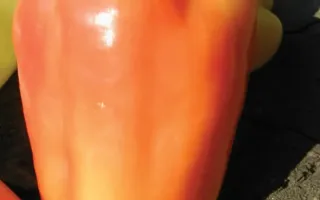
- Ripening Stage: The transition from a pale yellow-white color (technical maturity) to a vibrant red (biological maturity) is uniform. The blocky shape with 3-4 chambers meets exact retail standards.
When grown in open fields, this hybrid demonstrates excellent adaptability. The plants are compact and do not require complex staking, which simplifies maintenance and harvesting. If you are looking for a crop that combines thick walls with strong disease resistance, KENT F1 is your essential tool for the season.
Crop & resistance
Crop
Specifications hover over for a hint about the specification
|
Direction
Direction
Existing varieties and types of cabbage are grown for fresh consumption, long-term storage, and technical processing. |
|
|---|---|
|
Growing
Growing
Eggplant is grown in open fields and under protective cover on small areas. |
|
|
Growth Strength
Growth Strength
Pepper varieties differ in growth strength, ranging from low-growing (30-40 cm) to tall varieties reaching 2-3 meters. Accordingly, they are divided into determinate and indeterminate varieties. |
|
|
Fruit; color (technical maturity)
Fruit; color (technical maturity)
Technical maturity of pepper occurs 20-45 days after flowering. Such fruits are fully formed and have light green, green, dark green, yellow, or cream color. |
|
|
Fruit; color (biological maturity)
Fruit; color (biological maturity)
Biological maturity of pepper fruits occurs 35-45 days after technical maturity. Biologically mature fruits acquire red, yellow, or pink coloration, and their vitamin C and A, sugar, and dry matter content significantly increases. |
|
|
Fruit; shape
Fruit; shape
Spherical, oval, flattened or cylindrical shape. |
|
| Fruit; number of locules | |
|
Fruit; weight
Fruit; weight
Table watermelons weigh 0.6-16 kg. |
200-250 grams |
| Fruit; wall thickness | 8-9mm |
|
Recommended Density
Recommended Density
Optimal productivity is achieved at a planting density of 4000-5500 plants/ha. Possible planting scheme: 300-500x40-80 cm. |
35 - 55 thousand pcs/ha |
| Catalog | Catalog → Pepper |
| Manufacturer | SAKATA |
| Country | Japan |
Store offers · 4 from 4 stores
Prices are updated on loadLoading offers…
Aggregator catalog: prices are collected automatically from store websites, normalized by AI and converted at the current exchange rate. Before ordering, confirm the price and availability on the store's website. This block is not indexed by search engines — the data is loaded after the page opens.
Alternatives
Bell pepper · similar varieties


See also
Often considered together with this variety


Recently viewed
Similar items in this catalog section




Dennis F1
Seminis Vegetable Seeds
From your browsing history
53.1K 13 offers
65.3 €за 1000 шт ≈ 3 334 ₴


Comments · 0